The First-Home Buyer’s Insider Guide to the Kāpiti Coast
A quick heads-up before we dive in: This article is strictly for general informational purposes and does not constitute financial, legal, or tax advice. Every situation is entirely unique, and bank lending policies change frequently. Before making any decisions about your property journey, it is highly recommended that you seek independent advice from a qualified financial adviser.
For decades, the Kāpiti Coast was affectionately known as Wellington’s retirement capital. Today, it is one of the most highly sought-after destinations for first-home buyers and young families.
Offering warmer weather, flat sections, and stunning beaches, Kāpiti provides a lifestyle that is incredibly hard to find in Wellington City. But buying a house on the coast comes with a completely different set of environmental and infrastructure nuances.
From navigating the local water meter charges to understanding how the new expressways have shifted property values, here is the street-level truth about buying on the Kāpiti Coast, and exactly what you need to consider before putting in an offer.
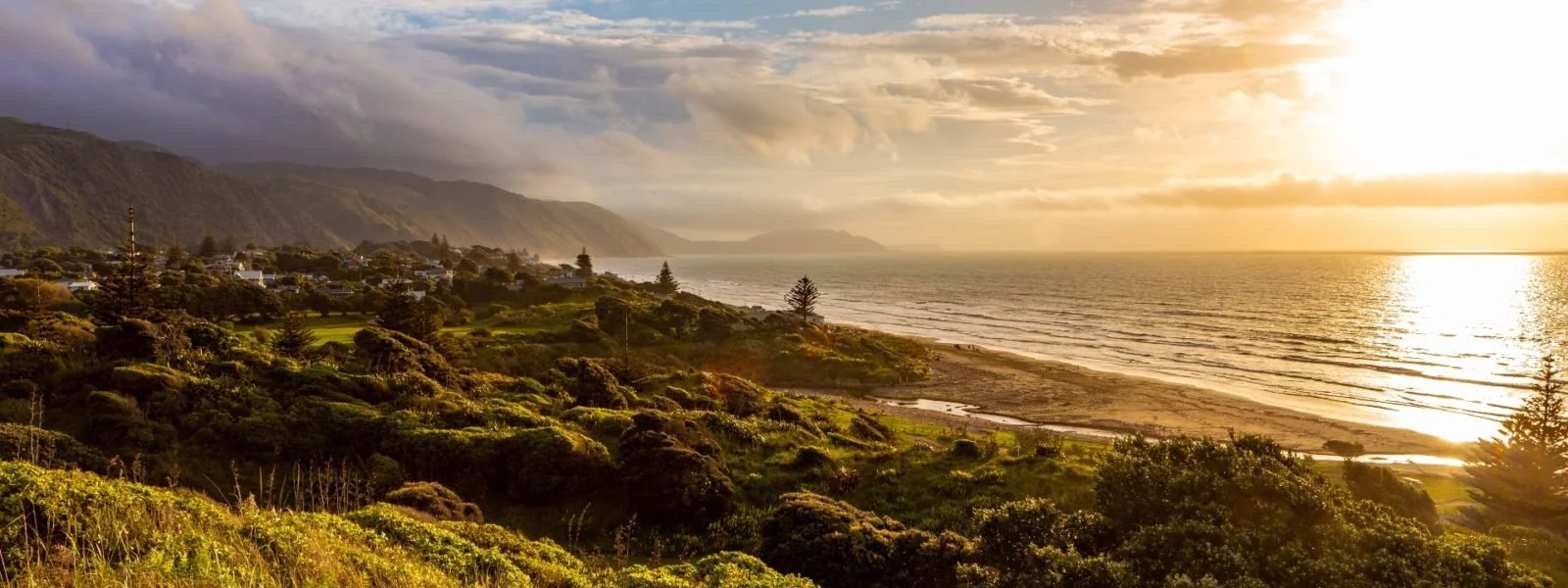
The Lifestyle Drawcards: Sun, Sand, and the Expressway Boom
Historically a retirement haven, Kāpiti has transformed into a booming, family-friendly coastal paradise with a microclimate that is famously warmer and sunnier than Wellington city.
The Expressway Effect: The opening of Transmission Gully fundamentally altered the geography of Wellington real estate. By bypassing the old, treacherous coastal road, the commute to the Wellington CBD has been slashed to a reliable 45 to 50 minutes. This infrastructure upgrade has driven immense capital growth and fierce competition for properties.
The Endless Coastline: From the safe, shallow waters of Raumati and Paraparaumu to the rugged beauty of Paekākāriki, you are buying into a true beach lifestyle. However, coastal erosion is a real factor here. If you buy too close to the dunes, insurers and banks will demand intense scrutiny of the local hazard overlays on the LIM.
Kāpiti Island Nature Reserve: Looming majestically off the coast, this predator-free island isn't just a stunning view from your living room; it creates a natural shelter for the coastline and is a world-renowned bird sanctuary accessible for incredible day trips.
The Paekākāriki Escarpment Track: Known as the "Stairway to Heaven," this steep coastal walking track hugs the cliffs high above the ocean and rail line, offering some of the most breathtaking, sweeping ocean views in the lower North Island.
The Motorway Effect: A Commuter's Dream
The completion of Transmission Gully and the Kāpiti Expressway (including the Peka Peka to Ōtaki stretch) has fundamentally transformed the region.
Across the three new expressway sections, the combined benefit was $173 million in 2024, with 3.8 million hours saved for those who used the roads. Because 74,000 more people are now within a 60-minute drive of the CBD, the housing price gap between Wellington City and the coast has narrowed significantly.
The Consideration: The expressways have pushed heavy traffic off the old State Highway 1, turning it into a quiet local road and massively boosting the appeal of properties that used to sit on a noisy highway. Conversely, if you are looking at a house in a newer subdivision bordering the new expressway, pay close attention to the road noise when you view the property, and check the building report for high-quality acoustic glazing.
The Water Meter Reality
If you are moving from Wellington City, Porirua, or the Hutt Valley, this is an adjustment. Most properties in the Kāpiti Coast District, unlike most other areas of the Wellington region, have water meters, and are charged for the water they use.
As of July 2026, the volumetric water supply rate is $2.27 per cubic metre.
The Consideration: You must factor these quarterly water invoices into your monthly budget. Furthermore, if you are buying a cross-lease property, you need to ask your solicitor how the water is billed. Every property has a 'primary' meter located at the Council's point of supply. On older cross-leases, multiple flats might share a single master meter, meaning you split the bill with your neighbour regardless of who uses the most water.
Let's look at a realistic scenario for a three-bedroom house with three occupants.
Usage: A fairly standard, water-conscious Kiwi uses about 175 litres a day. For three people, that is 525 litres daily, which works out to roughly 192 cubic metres over an entire year.
Volumetric Cost: 192 cubic metres x $2.27 = $435.84 per year.
Fixed Cost: The standard annual flat fee = $418.65 per year.
Total Annual Cost:$854.49.
Suburb Profile: The Coastal Charmers (Paekākāriki, Raumati Beach & Raumati South)
The highly desirable, community-focused beach towns.
These suburbs offer the ultimate Kāpiti lifestyle, featuring boutique cafes, excellent schools, and immediate beach access.
What you are buying: A fantastic mix of original 1950s and 1960s beach baches, heavily renovated architectural homes, and classic family weatherboards.
The Considerations:
The Sea-Salt Factor: Proximity to the beach is wonderful, but the prevailing westerly winds carry salt spray. Banks will look closely at your building report to see if the roof iron or cladding fixings are heavily corroded.
Coastal Hazard Overlays: Given their low elevation, your LIM report will likely outline coastal hazard zones (such as tsunami risk or projected sea-level rise). Speak to your insurance broker early, as insurers are becoming increasingly precise about which specific streets they will cover affordably.
Suburb Profile: The Central Hub (Paraparaumu & Paraparaumu Beach)
The commercial centre with the widest variety of housing.
Paraparaumu (or "Prm" to the locals) has everything from the main shopping mall and airport to the primary train station, making it the most convenient location on the coast.
What you are buying: Everything from 1970s brick-and-tile units to large 1990s family homes and brand-new townhouse developments.
The Considerations:
The Peat Soil Nuance: Large parts of flat Paraparaumu and Raumati were built on historic peat swamps. Peat soil is highly compressible. When it dries out in summer or if the water table changes, the ground can settle. When reading a building report, look closely for mentions of uneven floors, cracking in brickwork, or sticking doors, which can hint at subsidence. Homes built properly on peat require deeper, specific foundations—always have your building inspector check this.
Suburb Profile: The Garden Suburb (Waikanae & Waikanae Beach)
The peaceful, leafy enclave at the end of the electric train line.
Waikanae is famous for its mature trees, larger section sizes, and a slightly warmer microclimate. Because the electric commuter train terminates at Waikanae station, it is a brilliant option for those commuting into Wellington.
What you are buying: Generous 1980s and 1990s family homes, alongside high-end modern builds near the beach and the river.
The Considerations:
The Commuter Premium: Because it is the final stop on the highly reliable Kapiti train line, Waikanae commands a premium. If you are budgeting tightly, you are paying for that transport convenience.
Lifestyle Blocks: As you head towards the Reikorangi hills, properties often transition from town water and sewerage to private septic tanks and rainwater collection. If you are buying a lifestyle property, the bank will want assurance that the septic system is fully permitted and well-maintained.
Suburb Profile: The Northern Frontier (Ōtaki & Ōtaki Beach)
The emerging hotspot for affordability and space.
For a long time, Ōtaki felt a bit too far for a daily Wellington commute. The opening of the new expressways has completely changed that, making it the new frontier for first-home buyers seeking true value for money.
What you are buying: A mix of solid 1950s stucco homes, character villas, and a rapidly expanding number of new subdivisions.
The Considerations:
The Transport Nuance: While driving from Ōtaki is now a breeze, the train service is different. Ōtaki is serviced by the Capital Connection (which runs on a limited commuter schedule) rather than the frequent electric trains that stop at Waikanae. If you rely entirely on public transport, you will need to plan your commute far more strictly.
The Bottom Line for Kāpiti Coast Buyers
Buying on the Kāpiti Coast is a brilliant lifestyle move, provided you do your homework. The key is to look past the sunshine and focus on the practicalities: the water meter setup, the roof condition, the soil type, and the commute times.
Before you head out to an open home in Raumati or Ōtaki, send the property link to Home Loan Factory. We will run the numbers on the local council rates, review the hazard overlays, and structure a mortgage strategy that fits your coastal lifestyle perfectly.
Targeting the Kāpiti Coast? Let’s get your finance strategy sorted.