
Buying a Cross Lease Property: The Pros, the Cons, and What Your Bank Thinks
A quick heads-up: The information in this article is designed as a general educational guide only and does not constitute personalised financial, tax, or legal advice. Because everyone's situation is unique (and bank policies change frequently), we recommend speaking with a licensed Financial Adviser to see how this applies to your specific circumstances. For full transparency on our terms of service, how we are remunerated by lenders, and any specific situations where a fee may apply, please read How We Get Paid.
If you spend your weekends scrolling through New Zealand property listings, you have undoubtedly noticed that a significant number of properties are listed with a Cross Lease title.
For many first-home buyers, seeing the word "lease" can sound unfamiliar compared to a standard freehold title, often prompting questions about who actually owns the land and whether the bank will approve the loan.
The reality is that cross leases are an established, everyday way to own property across New Zealand. You are very much a property owner, and from a mortgage perspective, they are a practical and popular way to step onto the property ladder.
Here's how a cross lease actually works, how banks view them, the practical benefits, and the key checks you and your solicitor need to carry out before signing an offer.
What exactly is a cross lease?
To understand a cross lease, it helps to look back to the 1970s and 1980s. At the time, subdividing a large suburban section into separate freehold titles was expensive and heavily restricted by local council rules. To work within the framework, property developers developed the cross lease structure.
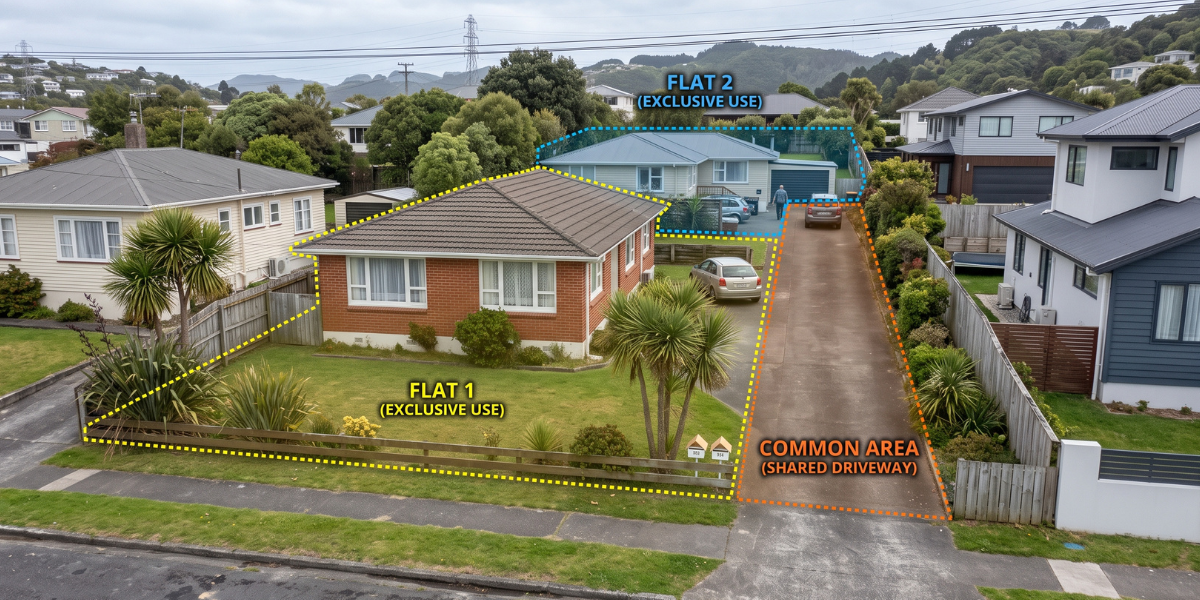
Instead of subdividing the land into separate legal parcels, the entire piece of land remained as one single title. When you buy a cross lease property, you acquire two legal interests at the same time:
- A share of the underlying freehold land: If there are two properties on the section, you own an undivided one-half share of the total land.
- A 999-year lease for your specific home: You and the other cross lease owner grant each other a long-term lease to exclusively live in your respective dwellings.
In simple terms: you own a share of the land together, and lease your specific home to yourself alongside your neighbour.
How banks evaluate cross lease properties
This is often the most reassuring detail for first-home buyers: from a lending perspective, banks generally treat cross lease properties exactly the same as standard freehold properties.
Because a cross lease includes an ownership share in the underlying freehold land, lenders consider them reliable, high-quality security. Unlike compact apartments, a cross lease does not trigger specialised minimum floor area rules or elevated deposit requirements.
The practical benefits of a cross lease
There are genuine advantages to considering a cross lease property:
- More accessible price points: Because the legal framework involves shared land, cross lease properties can sometimes trade at a slight discount compared to equivalent standalone freehold sections, making them an attractive entry point into desirable suburbs.
- No Body Corporate fees: Unlike unit title apartments or modern townhouses, cross leases do not have a Body Corporate. There are no annual administrative levies, no mandatory long-term maintenance funds, and no corporate management fees impacting your borrowing capacity.
- Shared maintenance on common areas: If the property has a shared concrete driveway or boundary retaining wall, routine repair costs are typically divided evenly between the owners rather than falling solely on one person.
Important checks: what you and your solicitor need to review
While cross leases are common, having your conveyancing solicitor conduct thorough due diligence before your contract goes unconditional is essential:
1. The Flats Plan and defective titles
This is the most critical check on any cross lease property. Every cross lease title includes a registered Flats Plan—a diagram showing the precise outline of the building footprint on the section.
Read more on how defective titles work here.
2. Neighbour consent for structural alterations
Because the underlying land is shared, the lease document typically requires you to obtain written permission from your cross lease neighbour before undertaking any structural alterations to the exterior of your home. If your long-term goal is to add a substantial extension or alter the roofline, a standard freehold title may offer greater autonomy.
3. Reviewing common areas and historic lease terms
Your cross lease document outlines how shared areas (like driveways) are managed, alongside "exclusive use areas" (such as your private garden or lawn).
Structuring your cross lease purchase
Purchasing a cross lease property is a routine and straightforward process when supported by clear advice.
At Home Loan Factory, we assess cross lease titles alongside our clients every week. Our advisory team knows how to present your application cleanly to lenders, and we coordinate directly with your solicitor to ensure title checks are reviewed early, keeping your deposit secure and your approval on track.
Found a cross lease property you want to make an offer on? Get in touch with the team at Home Loan Factory today.


